Australia faces an unprecedented climate crisis that will reshape our property landscape forever. The recently released Australian Climate Assessment Report reveals a sobering reality: $600 billion in property values could be wiped out due to climate-related risks. Even more alarming, the Climate Council warns that by 2030, one in every 25 Australian properties could become uninsurable.
I recently had the privilege of discussing these findings on ABC Radio's Life Matters, and the message I shared is one every Australian property owner and business leader needs to hear: this is not a distant threat. It is already here.
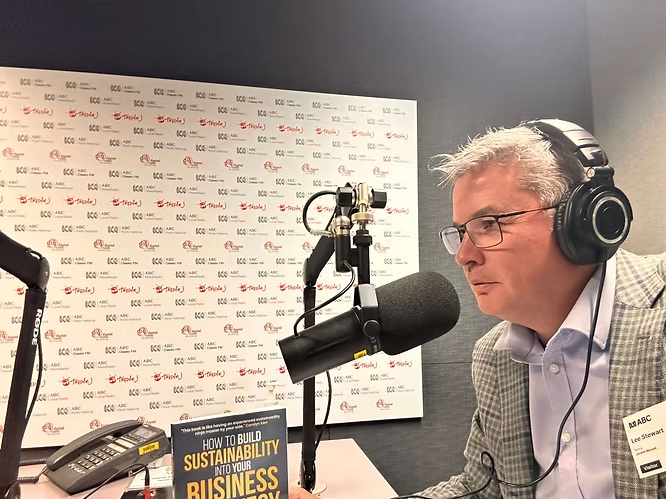
The era of "buyer beware" has arrived, and those unable to adapt or relocate may be left behind. But there is hope, and there are concrete actions we can take right now to protect our properties, our communities, and our future.
The $600 Billion Climate Risk Facing Australian Property Owners
The Australian Climate Assessment Report, released by the Australian Climate Service, represents the most comprehensive analysis of climate impacts on our nation to date. The findings are stark:
- $600 billion in potential property value losses across Australia
- 1 in 25 properties projected to be uninsurable by 2030
- Accelerating risks from floods, bushfires, coastal erosion, and extreme heat
- Insurance premiums already rising 20-30% annually in high-risk areas
- Mortgage lending becoming increasingly difficult in climate-exposed regions
During my ABC Radio interview, I emphasized that this isn't just an environmental issue, it's a financial, social, and economic crisis that demands immediate attention from homeowners, investors, councils, and businesses alike. For companies, mandatory climate reporting is making these risks impossible to ignore.
The Climate Council's uninsurability warning is particularly concerning. When a property becomes uninsurable, it effectively becomes unsellable and unmortgageable, trapping owners in depreciating assets.
Which Australian Properties Are Most at Risk?
Flood-Prone Regions and Coastal Areas
Australia's coastal properties and flood plains face the most immediate threats:
- Northern NSW and Southeast Queensland: Lismore, Byron Bay, Gold Coast, and Brisbane regions have experienced devastating floods, with some areas flooded multiple times in recent years
- Coastal erosion: Properties within 500 meters of the coastline face increasing erosion risk, with some Sydney beaches losing 20+ meters of sand
- Storm surge: Low-lying coastal suburbs in Melbourne, Adelaide, and Perth face inundation risks during king tides combined with storm events
Financial impact: Properties in these areas have already seen insurance premiums increase 50-200%, with some insurers withdrawing coverage entirely.
Bushfire Risk Zones
The catastrophic 2019-20 Black Summer bushfires were a wake-up call, but the risk continues to escalate:
- Peri-urban areas: Properties on the urban-rural fringe face the highest risk, particularly in Victoria, NSW, SA, and WA
- Alpine regions: Previously "safe" cooler areas are now experiencing unprecedented fire conditions
- Ember attack zones: Properties within 100 meters of bushland face extreme risk, even if not in direct fire paths
Financial impact: Bushfire-prone properties have seen insurance costs triple, with some insurers requiring expensive retrofits as a condition of coverage.
Extreme Heat and Storm-Exposed Properties
Western Sydney, Adelaide, and inland regions face increasing extreme heat events:
- Urban heat islands: Western Sydney has recorded temperatures 10°C higher than coastal suburbs
- Infrastructure failure: Extreme heat causes power grid failures, road buckling, and water supply issues
- Health risks: Vulnerable populations face hospitalization and mortality risks during heatwaves
Financial impact: Properties without adequate cooling, insulation, and shading are becoming less desirable, affecting resale values.
How Climate Risk Affects Property Values and Insurance
The Insurance Crisis: What "Uninsurable" Really Means
When we say a property is "uninsurable," the consequences cascade:
- No mortgage: Banks won't lend without insurance, making properties unsellable to most buyers
- Cash buyers only: The buyer pool shrinks to those who can afford to self-insure
- Forced discounting: Sellers must accept 30-50% below previous valuations
- Stranded assets: Owners become trapped, unable to sell or refinance
The Insurance Council of Australia reports that some regional areas are already experiencing this crisis, with entire postcodes facing insurance withdrawal.
Property Devaluation: Real Estate Market Impacts
Climate risk is already affecting property values:
- Flood-affected areas: Properties in Lismore have lost 40-60% of pre-flood values
- Bushfire zones: Properties in fire-affected areas trade at 15-30% discounts
- Disclosure requirements: Increasing transparency about climate risks is accelerating devaluation in high-risk areas
5 Steps Homeowners Can Take to Build Climate Resilience
1. Assess Your Property's Climate Risk Profile
Visit the Climate Council website and enter your postcode to check your exposure to flood, fire, and extreme weather events.
Additional resources:
- Your local council's flood and fire risk maps
- Insurance Council of Australia's risk assessment tools
- Bureau of Meteorology climate projections
2. Invest in Climate-Smart Property Upgrades
- Flood resilience: Elevate electrical infrastructure, install flood barriers, improve drainage
- Fire resilience: Install ember-proof vents, use fire-resistant materials, create defendable space
- Heat resilience: Improve insulation, install external shading, upgrade cooling systems, add solar panels
ROI: These upgrades typically cost $10,000-$50,000 but can reduce insurance premiums by 10-30% and preserve property value.
3. Improve Water Management and Flood Protection
- Install rainwater tanks for dual-purpose flood mitigation and water security
- Create rain gardens and bioswales
- Install backflow prevention devices
- Use deployable flood barriers
4. Enhance Fire Resilience Measures
- Immediate actions: Clear gutters, trim vegetation, install ember guards
- Medium-term: Replace combustible cladding, upgrade to metal roofing, install sprinkler systems
- Long-term: Comprehensive retrofit to BAL-40 standards
5. Advocate for Community-Level Climate Action
Individual action is essential, but collective adaptation reduces risk across whole regions:
- Attend council meetings and push for stronger climate adaptation plans
- Support local flood mitigation and fire prevention infrastructure
- Join community resilience groups
- Advocate for improved building codes in high-risk areas
Need Help Building Climate Resilience?
Our Fractional Chief Sustainability Officer service helps property investors and business owners develop comprehensive climate resilience strategies.
Climate Risk Management for Australian Businesses
Commercial Property Exposure
Businesses face property risks plus additional complications:
- Tenant obligations: Commercial leases may require climate risk disclosure
- Asset valuation: Climate risk affects balance sheet valuations
- Operational disruption: Events can shut down operations for weeks
- Supply chain impacts: Climate events affecting suppliers and logistics
ESG Reporting and Climate Disclosure Requirements
Australian businesses face new mandatory climate reporting under ASRS and AASB S2, requiring:
- Climate risk identification and assessment
- Financial impact quantification
- Scenario analysis
- Board oversight structures
- Transition and adaptation strategies
Why Resilience Matters: Beyond Property Values
Climate resilience isn't just about protecting property values. It's about:
- Safeguarding livelihoods: Protecting the homes and businesses that families depend on
- Preserving communities: Ensuring neighborhoods remain viable and connected
- Protecting future generations: Leaving a liveable Australia for our children
- Building economic stability: Preventing the cascade of financial losses that climate disasters trigger
The Australian Climate Assessment is a wake-up call but also an opportunity. With awareness, preparation, and action, we can shift from being vulnerable to being resilient.
Take Action Today
For Homeowners:
- Check your property's climate risk at climatecouncil.org.au
- Review your insurance coverage and discuss resilience upgrades with your insurer
- Start planning priority upgrades based on your specific risks
For Business Leaders:
- Conduct comprehensive climate risk assessments of all property holdings
- Review ESG reporting obligations under ASRS
- Develop business continuity plans for climate events
I will continue to use platforms like ABC Radio and beyond to push the conversation from awareness into action. The time to act is now.
About the Author: Lee Stewart is CEO of ESG Strategy, a Fractional Chief Sustainability Officer, and Climate Reality Leader with 22+ years of experience helping Australian businesses navigate climate risk and ESG compliance. As featured on ABC Radio Life Matters.
Sources: Australian Climate Assessment Report, Climate Council Australia, Insurance Council of Australia, ABC Radio Life Matters interview